
The Lineage of the House of Ayanbeku
Preserving generational continuity and documented family heritage.
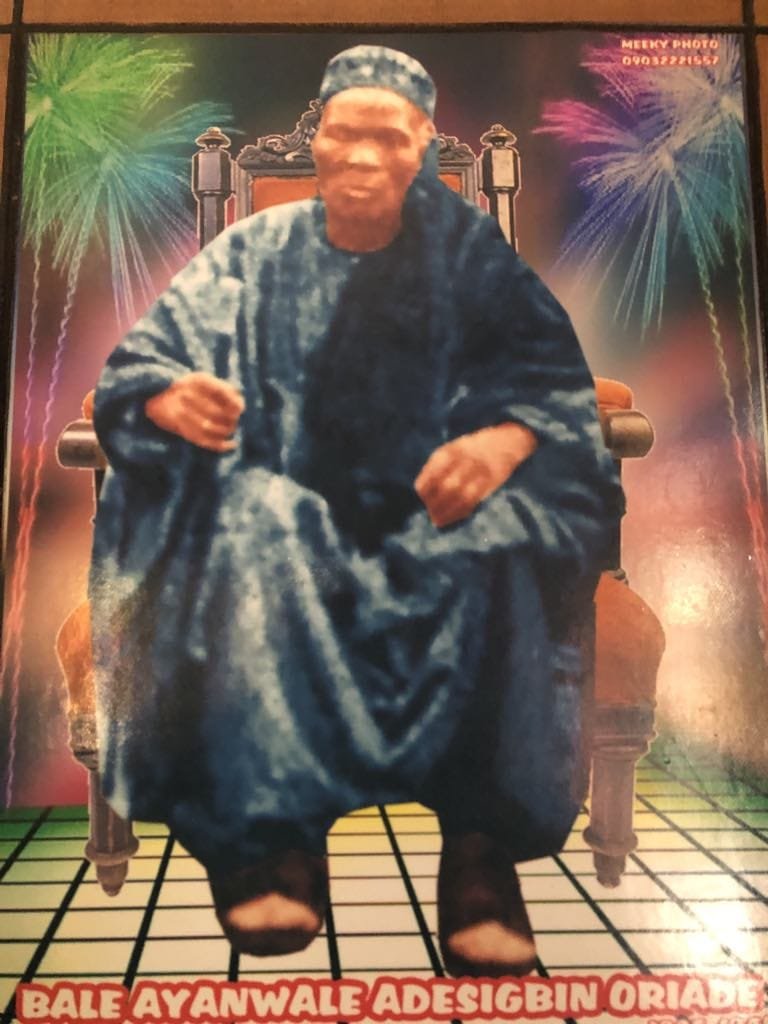
Aduloju, a.k.a Alapa-mon- niwon-dundun was the father of Oriade Adesigbin, progenitor of Adesignin Dynasty of Ifetedo, headquarter town of Ife South Local Government, Osun State, Nigeria.
A handsome and giant framed man, ebony complexioned Aduloju was by every standard and parameter an Oba- in – the- making. Prince Aduloju was a direct son of the very powerful and influential late Oba Abiodun Adegoolu, then Alaafin of Oyo. Fondly addressed as Obalola, meaning future- king, the ebony skinned young Prince Aduloju was popularly held and acclaimed as the undisputable successor to the powerful throne of Alaafin upon the demise of his father.
In those days, farming was the occupation of the people. Obas, princes, and their allies like warriors were known to be great and reputable farmers. Farming was particularly the ‘occupation of the palace’ as obas and members of royal families were reputed to be great farmers in addition to being warriors. Alaafin Abiodun Adegoolu was not an exception as he was reputed to be a great, successful and prosperous farmer.
According to available facts of history both oral and written, Oba Adegoolu one day invited heir apparent Aduloju to a father-son discussion that bothered on the choice of occupation for the young prince. Actually, Oba Adegoolu viewed the meeting as mere formality as it’s generally believed that the only occupation for obas and princes then was farming in addition to being warriors. Therefore, Oba Adegoolu could not imagine prince Aduloju being anything other than farmer. The Alaafin was therefore shocked and flabbergasted when his son, Aduloju told him that he was not going to choose farming as his occupation but but drumming. In those days drumming believably belong to commoners in the society.
Drummers were seen as dregs of the society and men of lower bith and as such not meant for those with noble and higher births like princes. On hearing from his son therefore that he would be a drummer rather than a farmer, Oba Adegoolu was bitterly incensed and enraged, and in this mood, he shouted the young prince out of his sight telling the young prince that it was a sacrilege and a great taboo and abomination that he had chosen to commit which he Alaafin Abiodun Adegoolu would not allow to happen.
This development set the young prince against the palace in particular and the entire Oyo Kingdom. To the palace and the entire Oyo Kingdom, Prince Aduloju must have gone insane or been bewitched or else, how could a man who was being groomed for the highly revered throne of the Alaafin of Oyo chose to descend so lowly as to become a drummer when drumming belonged to commoners and those of low births in the society. However despite the burning and near-consuming pressures mounted on and against Prince Aduloju in the palace and all over the entire Oyo Alaafin, the deviant prince remained resolute and uncompromising in his resolve to be a drummer. While the storm raged, the stubborn and unrepentant Aduloju had made friend with the head-drummer in the palace and undergone the needed training which had transformers him into a wizardry master drummer as well as a prodigious dancer.
When the ‘deviant’ prince could no longer withstand the pressures and heat coming from the palace and the whole of Oyo land following his opting for drumming instead of the Farmington as an occupation he decided to flee the palace and the Kingdom. And having acquired the needed apprenticeship and become a master drummer, Prince Aduloju fled the palace and Oyo Kingdom.
Upon fleeing Oyo, the young prince headed for a town known then and till now as Oko. He stayed in Oko for a period of time. He attempted to establish himself at Oko as a drummer but his efforts were a failure. Because he didn’t succeed at Oko, he therefore decided to leave the town. He left Oko and relocated to another town known till today as Iwere-Ile.
The young prince settled in Iwere-Ile and in no time not only did he gain the much needed acceptance among the people of the town, his “Dundun” talking drum and his art of drumming were warmly and enthusiastically welcome, embraced, accepted and adopted by the people. The dexterity and prolific mastery with which he practiced the art was so unique and unprecedented that within a short period, the drummer-prince had gained unprecedented followership tor himself and his DUNDUN talking drum.
This informed the inclusion of the following saying in the panegyric (ORIKI) of the Adesigbin Dynasty:
“Iwere nile
Oko loja
Oko o gba mi
Mo dawoo re ‘Were Ile”
Translatively:
“Iwere is the home
Oko the market place
Oko couldn’t accommodate me
I migrated to Iwere ile.”
At Iwere-Ile, Prince Aduloju’s became very popular. His fame as prodigious drummer and a wizardry master dancer spread far beyond Iwere-ile. His fame now as a successful drummer and a rich man kept soaring higher, far and wide.
Ironically, after making his mark the great way as a drummer, the prince got his hand onto farming. And this was another huge success story that earned the run-away drummer -prince greater wealth and fame.
The prince -drummer had everything going well for him. His drumming profession was booming and enriching earning him great respect, admiration, reputation as well as fame in addition to women. In the same vein, his farming practice was no less successful. He was eminently counted and numbered among the successful and wealthy farmers of not only Iwere-Ile but beyond and far, even as far as Oyo Alaafin, his original home. He was happily married and blessed with children both male and female.
When the news got to Oyo Kingdom that the ‘deviant’ prince had become a successful drummer and farmer in Iwere-ile, the Oyo palace and the people met and decided to send emissaies to the prince to implore him to return home. Therefore, a first delegation of only palace chiefs was sent from his father, Alaafin Abiodun Adegoolu to plead with the prince to return home. But tried as it could, the first delegation met a brick wall as the prince politely rejected their pleas to return him. A second delegation comprising mostly of friends of the prince came calling. But with greater politeness , the prince once again rejected their entreaties for him to return home. Not yet done, another delegation which had the queen and mother of the prince at its head came down to Iwere-ile again to appease the prince to come home. After lavishly entertaining this latest delegation led by his mother, the ‘arrogant and stubborn ‘ drummer -prince politely rejected the pleas and entreaties for him to return home .
Upon the departure of the third delegation, prince Aduloju sat down to think over the situation. He then reasoned that to avoid the unwanted pressure from the home front, he needed to relocate and move far away from Oyo Alaafin. Thus after conferring with his wives , Prince Aduloju decided to relocate to Ile Ife, ancestral home of the Yorubas. Consequently, the super polygamous prince got his family of eleven wives and many children with some of his apprentices who chose to relocate with him and relocated to Ile- Ife.
On getting to Ile Ife with his train, Prince Aduloju headed straight for the palace of the Ooni of Ife where he was received by the then Ooni of Ife, Oba Adejinle Abewela. Upon introducing himself as a Prince from Oyo Alaafin, the Ooni accorded him befitting reception. The self introduction greatly recommended him to the Ooni earning him the royal father’s great admiration, regards, love and enthusiastic acceptance. The Ooni then handed his guest to one of his cousins, Prince Kugbayigbe who were with him in the palace at the time the drummer- prince arrived the palace. Prince. Kugbayigbe, who was to later became the founding Aare (Onibon) of Eba Odan (which the city of Ibadan, capital of Oyo State was formerly called) and also one of the great original founders and first ruler of Okeigbo brought his guest to the Ehindi, family compound of Oba Abeweela and Aare Kugbayigbe himself. Thus Prince Aduloju settles down with his very large family.
In Ile Ife, the Oyo prince was not initially favourably received with his DUNDUN drum. To the Ifes, the DUNDUN was strange, the native OSIRIGI being the traditional Ife drum. The OSIRIGI was the drum of the palace; the drum of royalty and the official drum of the Ooni of Ife. Therefore the DUNDUN drum was less fancied and less accepted by the Ifes. This unfavorable development therefore forced Prince Aduloju to turn to the neighbouring town of Modakeke to solicit and work reception and patronage for his DUNDUN. Though the DUNDUN drum was strange to the Ifes, it was not to the Modakekes. The Modakekes who were originally Oyo people were already used to the DUNDUN drum from their original home, Oyo Alaafin. DUNDUN, which was nicknamed SAABADA by the Ifes was the original drum of the Modakekes who were not used to the OSIRIGI of the Ifes. So it was with great enthusiasm that the Modakekes received Prince Aduloju and his DUNDUN drum. As time went on, the Modakekes flocked the Ehindi home of the drummer-prince for training as drummer.
As time went by however, Prince Aduloju and his DUNDUN drum started making in-roads into the circles and gatherings of the Ifes. The DUNDUN gradually started to outsmart and gain ground as a worthwhile alternative to OSIRIGI. The use of DUNDUN to praise-sing people and chant their panegyric (oriki) started to recommend and endear it to the Ifes as a better alternative to the OSIRIGI. The Ooni and warriors came to prefer the DUNDUN to the OSIRIGI because the former could be used to praise – sing , a feat the latter couldn’t perform. Thus Aduloju and his DUNDUN gained preference over OSIRIGI.
Prince Aduloju later came in contact with the legendary Prince Aderinsokun Ologbenla, Ile Ife born prince, warlord and generalissimo. Aderinsokun took instant liking to Prince Aduloju. He was particularly impressed, excited, enchanted and bewitched by the Aduloju’s type of talking drum which unlike the Ife’s OSIRIGI could be used to sing people’s praises and chant ORIKI. Reasoning very well that Aduloju’s DUNDUN could serve very well as a veritable and potent weapon of war as it could be used to sing the praises of warriors and fighters and as such arouse their passion and boost their morale and fighting spirit and prowess. With this, the legendary Aderinsokun Ologbenla shortened to “Derin Ologbenla , the founding Balogun of Eba Odun ( which later became Ibadan) brought in the drummer-prince, Aduloju to become a soldier in the Ile-Ife based army led by Ologbenla himself and his cousin, Aare Kugbayigbe.
Prince Aduloju thus because a principal member of the Balogun Aderinsokun ( ‘Derin) Ologbenla led army which included other notable warriors like Aare Kugbayigbe from Ile Ife, Odo Eleyowo from Ifewara, Otun Sowo from Owu-Egba, Oluwo Adedimeji Ajibike from Egba Alake, Alugbin from Ofa, Esubi from Ofa, Kuole Oloje from Ila- Orangun, Ogunbi Abari from Owu- Egba, Onilewo(formerly Onilemo) from Origbo, Ajarogungbo from Origbo and Asun-ganga-Tope-Lorun also from Origbo and others who went to Ondo on the order of Ooni Abeweela to go and defend Oba Arilekolasi, Osemawe of Ondo who was then under the rebellious attack of his subjects, the Ikales. The Ologbenla led army successfully prosecuted the Ondo war leading to the founding of Okeigbo.
Like other original founders of Okeigbo, Prince Aduloju brought down his entire family, including his wives, children and apprentices from Ile Ife to the newly founded Okeigbo. Prince Aduloju was among the chosen few who constituted the cabinet of Okeigbo with the oldest member of the founding team, Aare Kugbayigbe as the head of the town( Olorii wa) and the military leader of team, Balogun Derin Ologbenla as the second – in- command, Balogun.
While in Okeigbo Aduloju married more wives in addition to the eleven he brought from Ile Ife. He was the father of the DUNDUN drum in Ife.
Prince Aduloju was given the nickname “Alapa-Mon-Niwon-Dundun by his fans and admirers on the account of his diminutive stature. The nickname Alapa-Mon- Niwon-Dundun shortened to Alapa meant “The one whose hands suited Dundun drum”.
According to facts of history, Chief Aduloju was before was a super polygamist who was twenty three wives richer before his demise. He was equally credited with very many children among whom was Prince Ayanwale Oriade Adesigbin who was indeed the progenitor of the Adesigbin Dynasty. Although the Adesigbin Dynasty could be said to have taken its root from the Oyo Alaafin born Prince Aduloju Adegoolu, it’s real progenitor was however Prince Ayanwale Oriade Adesigbin, a.k.a Baba Eleinla.
Like his father, Ayanwale Oriade Adesigbin was dark complexioned , diminutive, stoutly built and very handsome. He took completely after his father, Aduloju Adegoolu in drumming and farming. And like his father too, he was dexterous, prodigious and wizardry as a drummer . He was also a successful and wealthy man by the standard of those days. Infact, he was reputed to have been among the richest and most influential men of his time. In addition to being a successful drummer and farmer, he was also into animal husbandry rearing the native cows known then as EINLA. Like his father too, Ayanwale Oriade Adesigbin was a polygamist with a large number of wives and children. His animal husbandry vocation made him more famous and richer. Actually it was his animal husbandry vocation that earned him the chieftaincy title of AARE AGO of Okeigbo before the dismemberment of Okeigbo in 1930 leading to the founding of Ifetedo.
Following the breaking up of Okeigbo on 2nd April, 1930, Aare Ago Ayanwale Adesignin was among the aggrieved Okeigbo emigrants who left Okeigbo to found Ifetedo.Before departing Okeigbo, Chief Ayanwale Oriade Adesigbin, an acclaimed first class polygamist was said to have had twenty two wives and numerous children. Among his many children was Gabriel Ayanbeku Adesigbin, father of late Asiwaju of Ifetedo and a former member of the Federal House of Representatives,(Hon) Moses Oyeleye Ayanromade Ayanbeku and late Hon Eniola Ayanbeku, a former local government chairman.
Following the break up Okeigbo on April 2nd, 1930, Chief Aare-Ago Ayanwale Oriade Adesigbin was one the aggrieved Okeigbos who emigrated from the town to found OKE-ODO which later became IFETEDO. Chief Adesigbin departed Okeigbo with the entire Adesignin leaving no one behind in the beleaguered Okeigbo.
In Ifetedo, Chief Ayanwale Oriade Adesigbin retained his chieftaincy seat of Aare Ago as he was while in Okeigbo while the eldest of the emigrants, Pa Fadeyi became the leader ( Baale ) of the new settlement. Upon the demise of Baale Fadeyi, against all protocols and odds, Chief Aare Ago Ayanwale Oriade Adesigbin became the Baale succeeding Baale Fadeyi.
Before he relocated to Okeigbo with the entire Aduloju Adesigbin Family to Okeigbo from Ile- Ife, Ayanwale Adesigbin had been in a relationship with a beautiful young woman from the famous Ojuade family of Oke-Ijan, Ile Ife called Omitidawe Asoreebi. So when the time came for the young Oriade Adesigbin to marry, he made his way to the Ojuade family of Oke-Ijan, Ile Ife to ask for the hand of his hearth rob, Omitidawe in marriage. The marriage was proudly successful and productive. Among the children of the marriage was Gabriel Ayanbeku Adesigbin. Actually, Gabriel Ayanbeku Adesigbin was the last of his mother’s children. The entire Adesigbins were living in Okeigbo as at the birth of Gabriel Ayanbeku Adesigbin. He, Gabriel Ayanbeku drew up in Okeigbo and even got married with children in Okeigbo before the unfortunate disintegration of Okeigbo in 1930 that led to the founding of Ifetedo with the consequent relocation of the Adesigbins to the new settlement which was initially known as Oke-Odo before it’s final transmission to Ifetedo.
Prince Gabriel Ayanbeku Adesigbin was a very successful and rich farmer going by the standard of those days. He was a towering figure , handsomely built and ebony complexioned. Although he took after his father in farming , unlike his father however, he didn’t take to drumming. He was predominantly farmer. He never at any time took to drumming as an occupation, he was however adept in the art of drumming. According to historical facts, Gabriel Ayanbeku Adesigbin was by the standard of those days, one of the richest, most popular and most influential young men of his days in Okeigbo. In addition he was a free mixer socialite who was much then a ” trail-blazer and pace- setter’ who could be described as ‘ primus- inter – pares’ or ‘ lord of the manor”.
A polynomial with moderation and decency, Prince Gabriel Ayanbeku Adesigbin married to two wives, the first of the wives being Mrs Olajope Ayanbeku and the second being Mrs Emilia Olawumi Orofunke Ayanbeku nee Ayanbeku. Emilia Olawumi Orofunke was the first daughter of Fasogbon and a granddaughter of Odo Eleyowo, one of the legendary founding fathers of Okeigbo. The legendary Odo-Eleyowo was from Ifewara and was among those warriors who founded Okeigbo alongside the legendary Balogun Ologbenla, AAre Kugbaigbe et al. Fasogbon was one of the children of Odo- Eleyowo while Emilia Olawumi Orofunke was the first daughter of Fasogbon.
Olajope the first wife was blessed with children with the late Ayanbooye Eniola Ayanbeku being the first child of the couple and ultimately first child of the Gabriel Ayanbeku Adesigbin. Equally, the marital union between his second wife, Emilia Olawumi Orofunke was successful with a female child, Morantiade later Mrs Aroke as the first product of the union. The birth of Morantiade was disappointing to Mrs Emilia Orofunke Ayanbeku who had anticipated a male child to stand her in equal stand with her rival Olajope, the first wife. It was therefore a great relief, joy and pride to Emilia Olawumi Orofunke when on the twenty second day (22nd) of April, 1930, when her second child , Asiwaju (Hon) Moses Oyeleye Ayanromade Ayanbeku came to the world a bouncing baby boy.
Prince Gabriel Ayanbeku Adesigbin lived with his family at the Idi-Ega area of Okeagbe, Okeigbo where toddler Moses Ayanromade (shortened to Ayanro) lived with his parents until the dismemberment of Okeigbo on April 2nd , 1931 and the entire Adesigbin family alongside other aggrieved Okeigbod emigrated to found Ifetedo. Boy Moses Oyeleye Ayanromade Ayanbeku was almost a year old when he was brought to Ifetedo from Okeigbo. He grew up with his parents at the Adesigbin family compound of Ogbon Ayesan ( Ayesan Street), Ifetedo. In 1936, he started his elementary education at St.Peter’s Anglican School, Okesoda Street, Ifetedo. Reputed to be very brilliant, Moses Ayanromade Ayanbeku was doing when in his studies to the admiration of both teachers and pupils of his school on one side and the delight and happiness of his parents on the other until 1940 when the unexpected happened and ‘SANGBA’ broke. This unfortunate event of 1940 was to later mark, shape and reshape the destiny, future and fortunes of the Ayanbekus for life.
Earlier in the month of September, around the fifteenth day of the month in 1940, a mysterious ailment had suddenly gripped the agile and restive Gabriel Ayanbeku rendering him inactive and immobile. Very many herbalists, juju men, Muslim alfas and Christian prophets were brought in but the ailment defied all solutions. The bedridden was then taken out for orthodox medical attention at the General Hospital, Akure. At the Akure General Hospital all efforts were made to save the life of the man but all to no avail. So on 20th September 1930, the inevitable happened, ‘SANGBA’ finally broke and the man died. As at of the death of Gabriel Ayanbeku Adesigbin, his father Chief Ayanwale Oriade Adesigbin had become Baale of Ifetedo.
A Death Too Devastating
It was a death too devastating. The death of Gabriel Ayanbeku Adesigbin was not only devastating but greatly catastrophic and tragic to the family. It was a momentum that was to alter, redefine, reshape and reposition the family compass of the Ayanbekus. The immediate family of the deceased were to later pay heavily for the death of their father. And with the death of the man, an era ended in the lives of members of the family he left behind including principally, the school going youngster, Moses Oyeleye Ayanromade fondly called AYANRO. The death brought about a painful dispersal to the once united and close knit family as there was no body to it together. None of the siblings of the deceased or any other member of the larger Adesigbin family was willing to assist any of the children and wives left behind by the deceased. The family was completely abandoned and deserted thus the family was forced into ultimate dispersal as everybody had to fend for himself and herself.
Ayanro’s mother, Widow Emilia Orofunke Olawumi Ayanbeku was forced to relocate to her Okeigbo home of origin at Odo Compound with Moses Ayanromade and his siblings including his elder sister and the only female child of the family, Morantiade, Temidayo, Taiwo, Kehinde, Johnson and Olaobaju.
After, some time with his mother at Ile-Odo, Okeigbo, Moses Ayanromade decided to throw himself into the world with unprecedented stubbornness to withstand all challenges and vicissitudes and the grim determination to weather all storms and succeed despite all odds and obstacles.
According to Chief Ayanbeku himself “I stayed with my mother at Ile-Odo, Okeigbo for some time when I decided to throw myself into the world with the strong stubbornness to withstand all challenges and vicissitudes and the grim determination to weather all storms and succeed despite all odds and obstacles. In the first instance, I put into consideration the need to bring up my siblings especially my younger brothers. It dawned on me that my mother alone could not successfully cater to the needs of the children. I then realized that I needed to brave all odds , fight all battles , conquer all obstacles and succeed so that I could assist my mother in bringing up my younger brothers. With this mindset, I woke up one day and headed for Ile-Ife where my grand-mother, my father’s mother, Omitidawe Asoree I had returned after the death of her husband and my grandfather, Baale Ayanwale Oriade Adesigbin in 1941”. It should be noted that not only was the death of Gabriel Ayanbeku Adesigbin’s death devastating, it ultimately resulted in the sudden death of his father who was at the time of the tragic occurrence of the traditional ruler ( Baale) of Ifetedo.
Life in Ife was very hectic, wavy, slippery, hard, tempestuous, hazardous and turbulent. The young Moses was exposed to and go through several agonizing difficulties, discouraging and depressing circumstances that only a tough, hard hearted and spartan spirited man could endure. A very stubborn and resolute fighter, Chief Ayanbeku plunged himself headlong into the battles of life bravely and courageously like the spartan. In battle, he was met with several and severe yawning gulfs and discouraging disappointments and failures but he refused to be depressed and defeated. A tough man that he was, Ayanro kept moving and fighting even when the going was very rough and tough and the battle most fierce, most burning and most consuming. Even though bruised and battered in battle, he was however not shattered or butchered. He fought gallantly like the spartan and at the end came out erect and unbeaten.
Chief Ayan’s educational journey was not only hectic and turbulent, wavy and slippery, hazardous and tempestuous but absolutely unenviable. This is how the nursing giant described his journey in the education world “Honestly my journey in the school system had been absolutely stormy, wavy, slippery, turbulent and traumatic. But throughout the stormy, turbulent and traumatic journey, I did not lose sight of my vision and mission…
My journey through school was not at all and in any way or form enviable, but the courage, the raw determination, the unprecedented fortitude and the unconquerable spartan spirit I put into the battle were challenging, inspiring and worthy of being imbibed and emulated by the younger ones. Really, my school life experience is a great and useful testimony to the saying that you can’t subdue and defeat a determined and willing spirit.
I refused to be subdued and defeated by the odds and vicissitudes of life that confronted and embattled me then. When the going was rough and tough, I roughened and toughened it out. When the battle was hot and fierce, I refused to be defeated and chose to remain erect at the hottest and fiercest points…
I fell several times in the course of the turbulent, hazardous and traumatic journey, not of my own making or my undoing or failure, but as a result of financial problem. But the most beautiful thing about and in the whole story was that each time I fell, I surmounted greater courage and strength to be stronger and better energized and invigorated than before. I strongly held dear to the saying ” The glory is not in never falling but in rising each and every time we fall.”